

Our Services:
Surgical Procedures
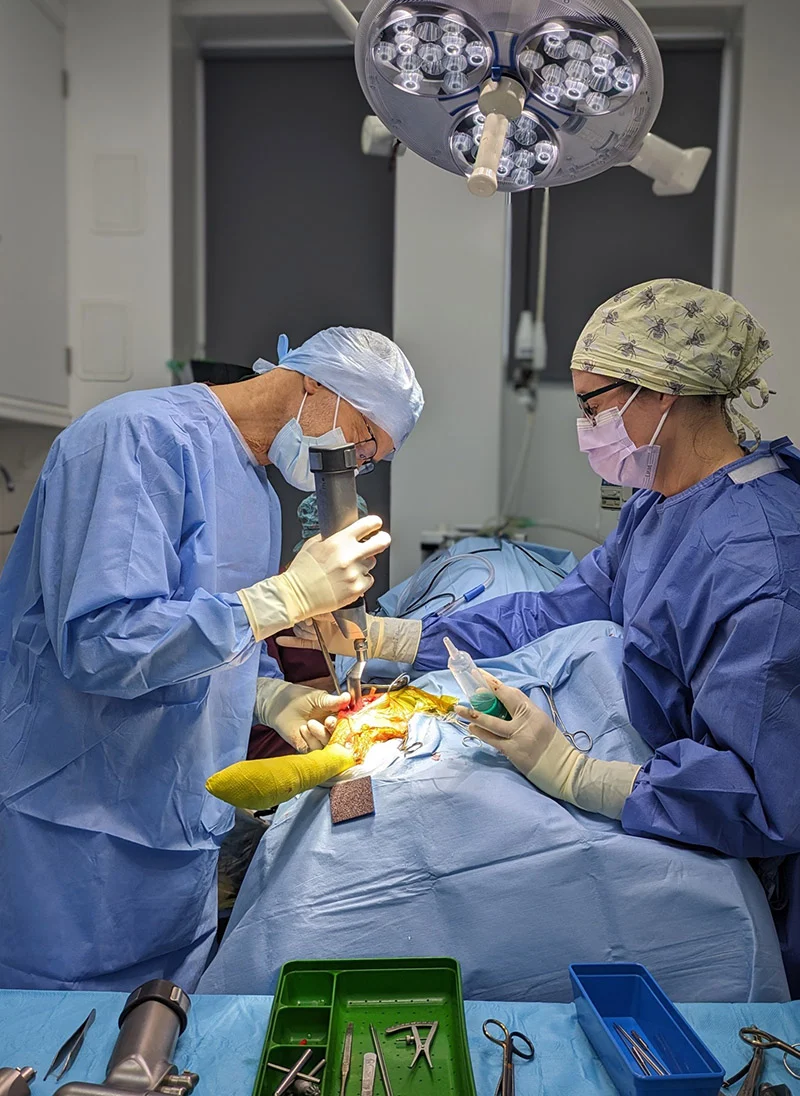
At Coast, we specialise in a wide range of surgical procedures, from cruciate and patella surgeries to fractures and the management of trauma and disease.
Our work covers the most up-to-date investigative procedures including pre and post-surgical radiography, and follow-ups. We have many very happy patients and owners (both cats and dogs).
Our Services:
Surgical Procedures
At Coast, we specialise in a wide range of surgical procedures, from cruciate and patella surgeries to fractures and the management of trauma and disease.
Our work covers the most up-to-date investigative procedures including pre and post-surgical radiography, and follow-ups. We have many very happy patients and owners (both cats and dogs).
About Orthopaedic Procedures
Coast orthopaedic services cover every condition related to the bones and joints of dogs and cats. We have clients right across the south coast of the UK.
Our comprehensive orthopaedic service offers onsite advanced imaging (MRI and CT scanning) and arthroscopy which allows for advanced investigation of orthopaedic conditions. We have the most advanced orthopaedic instrumentation, enabling our surgeons to perform both internal and external fracture fixation, arthroscopic surgery, joint replacements, and correction of limb deformities by a variety of techniques including limb lengthening, and joint fusions (arthrodesis). This paragraph needs re-writing (this is from North Downs).
Many of our referrals cover the following orthopaedic conditions:
- Cruciate disease including tibial osteotomies (TPLO, cranial closing wedge osteotomy)
- Patella luxation surgery
- Fracture fixation including complex and simple fractures
- Lameness investigation
- Postoperative radiography
- Investigation and treatment of elbow dysplasia
- Arthrodesis of chronically painful joints
- Arthroscopy
- Treatment of limb deformities
- Management of osteoarthritis
- Corn surgery (SDF/DDF tendonectomy)
For our clients, the advanced field of orthopaedic animal medicine can cover a range of complex explanations which, as vet professionals, we need to communicate. Your pet (and our patient) may need specialist treatment and surgery, and it is important to explain what that involves and understand why it is needed. You are entrusting us to ensure the best treatment, and paying for that expertise.
We therefore ensure you have enough information, so you know what to expect, and understand the likely outcomes. For some procedures/surgeries, we provide a non-technical summary as part of the consultation. This is a useful guide to demystify your pet’s treatment. Please feel free to view three examples below:
Surgery to Treat Cruciate Ligament Rupture – Cranial (Tibial) Closing Wedge Ostectomy
CCWO is a surgery for smaller dogs that have an unstable stifle joint due to a rupture of their cranial cruciate ligament (CCL). It is an alternative surgery to those that replace the cruciate ligament or use an internal stitch to tether the tibia and femur together.
Surgeries that change the slope of the tibia, like CCWO, have been shown to provide better results than other forms of surgery for dogs that have ruptured their CCL.
Surgery to Treat Cranial Cruciate Ligament (CCL) Rupture – Tibial Plateau Levelling Osteotomy (TPLO)
TPLO is a surgery for dogs that have ruptured their cranial cruciate ligament (CCL) and have an unstable stifle joint. It is an alternative to replacement of the ligament and has been shown to provide better results than CCL replacement surgery.
When the CCL ruptures the dog develops an unstable stifle joint.TPLO surgery changes the level of the tibial plateau and the angle at which the femur and tibia meet. This has the effect of eliminating this force so that the stifle becomes stable when the dog places weight on the limb.
Arthroscopy (type of keyhole surgery) for Elbow Dysplasia
Elbow Dysplasia simply means ‘an abnormal development of the elbow joint’. The elbow joint is the joint in the front leg below the shoulder and above the wrist. The term Elbow Dysplasia includes a number of specific primary problems that affect different sites within the elbow joint.
These primary problems may begin when the puppy is only a few months of age and will commonly affect both elbow joints. More than one primary problem may exist simultaneously. Once a primary problem has started secondary change soon follows. Secondary change takes the form of abnormal joint cartilage wear and osteoarthritis. These secondary changes may have consequences for the rest of the dog’s life.
Treatment should always be tailored to the individual dog taking into account their specific type of Elbow Dysplasia, its severity and their age and breed. Decision making is improved by collecting as much information about the dog as possible before deciding on a course of treatment.